Design for Empowerment is a platform and evolving community dedicated to exploring how design can actively support processes of social transformation.
Our Story
Rooted in academic research and grounded in practice, this initiative grew out of a shared inquiry between Dr Laura Santamaria (Royal College of Art) and Dr Ksenija Kuzmina (Loughborough University London), whose collaborative work has spanned journal articles, international conference tracks, and now, a forthcoming book published by Bloomsbury.
Our research investigates how empowerment is conceptualised, facilitated, and evaluated in design-led social change, and how designers can be more accountable in addressing complex power dynamics.
We believe empowerment is not an incidental benefit of good design, but a deliberate and strategic practice that must be critically understood, carefully planned and meaningfully enacted.
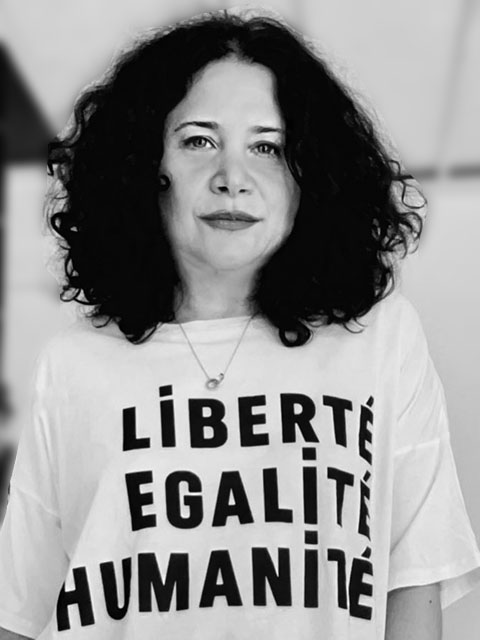
Dr Ksenija Kuzmina
Dr Laura Santamaria
Why This Matters
Designers often claim to ‘empower’ others, yet few frameworks exist to interrogate how empowerment is actually achieved or whose power is being advanced. In a context of accelerating ecological collapse, social inequality, and cultural marginalisation, there is an urgent need to reclaim design’s political potential – not just as a creative process, but as a catalyst for meaningful, collective change.
design for empowerment responds to this call by offering tools, language, and strategies to:
Make power visible and navigable within design contexts
Build human and collective agency through participatory and reflexive methods
Challenge systems of domination and co-optation through narrative and symbolic means
Together, we can design a world that celebrates equity, inclusivity and collective agency.
Design for Empowerment is a research programme developed through participatory research and design practice at Loughborough University London and the Royal College of Art, in collaboration with communities, designers and practitioners.